
Laminar Fittings
US B2B Distributor · Est. 2016
Reference guide to 43 common brass fitting archetypes we supply across plumbing, HVACR, automotive, electrical, oil & gas, and marine applications. Each entry covers the fitting's purpose, common applications, and typical materials.
Browse by category below, or use your browser's Find (Ctrl+F / ⌘+F) to search within the page.
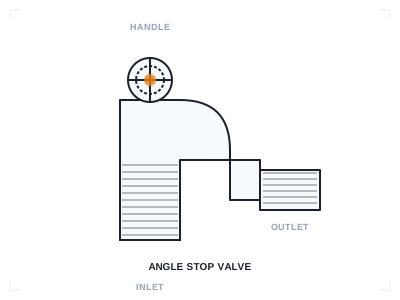
Compact quarter-turn or multi-turn valve at fixture supply points — combines a shutoff valve with a 90° direction change in one fitting.
Learn more →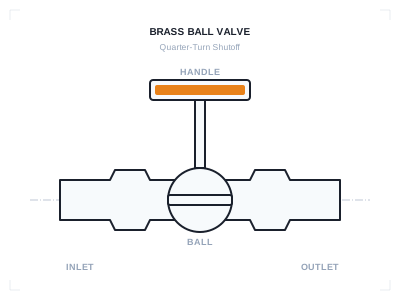
Quarter-turn shutoff valve with a rotating ported brass ball — fully open or fully closed with a 90° handle turn.
Learn more →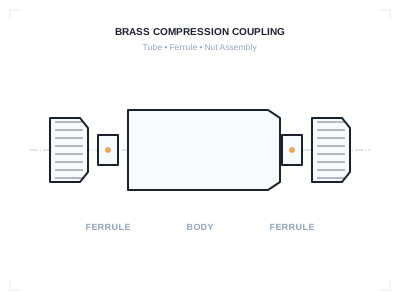
Gasket-free brass fitting that seals two pipe ends using a compression nut and ferrule — no soldering or threading required.
Learn more →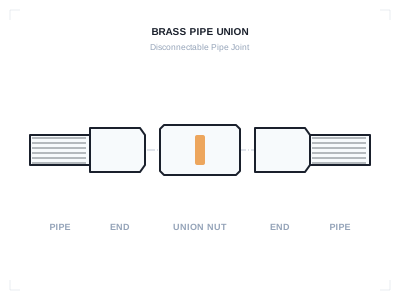
Threaded brass fittings for joining two pipe ends in a straight run — couplings for permanent joints, unions for disconnectable service.
Learn more →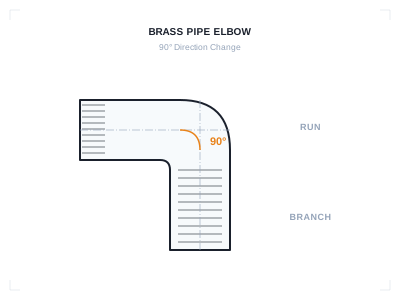
Threaded brass fitting that changes pipe direction by 90° or 45° — available in forged or cast styles for water, gas, and…
Learn more →
Short threaded brass connectors that bridge between fittings or transition between thread types (NPT to BSP, male to female, etc.).
Learn more →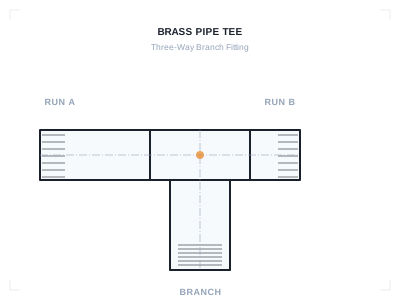
Three-way threaded brass fitting that creates a branch off a main pipe run — available in equal-size and reducing configurations.
Learn more →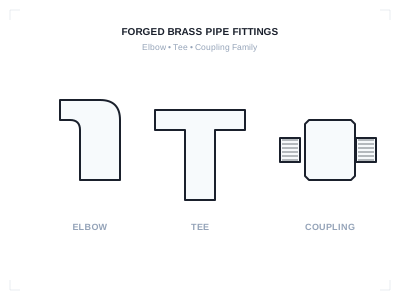
Pressure-rated threaded brass fitting made by hot-forging rather than casting — higher strength, finer grain structure, better for industrial service.
Learn more →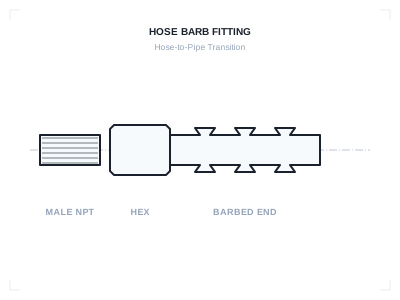
Brass fitting with a ridged barb that fits inside a flexible hose, secured by a hose clamp — for hose-to-pipe transitions.
Learn more →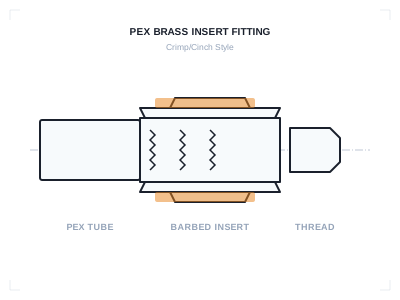
Lead-free brass fitting that connects PEX tubing to threaded plumbing — works with crimp-ring and clamp/cinch installation methods.
Learn more →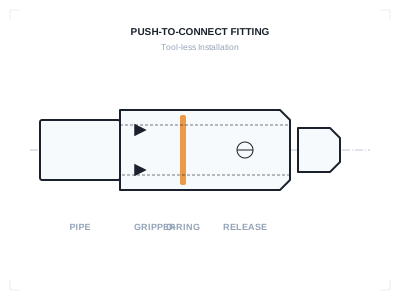
Tool-less brass fitting that grips and seals pipe with internal teeth and O-ring — pushes on by hand, releases with a release…
Learn more →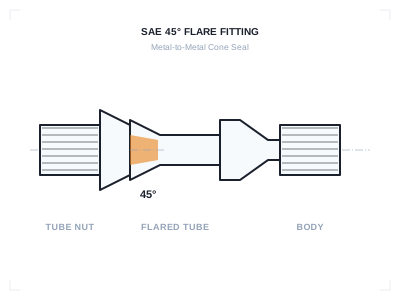
Flare-style fitting for HVACR and gas service — the pipe end is mechanically flared to a 45° cone that seals against the…
Learn more →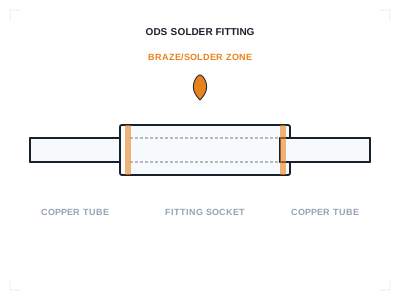
HVACR refrigerant fitting with a sweat (solder) connection — the tube slides into the fitting and is brazed in place.
Learn more →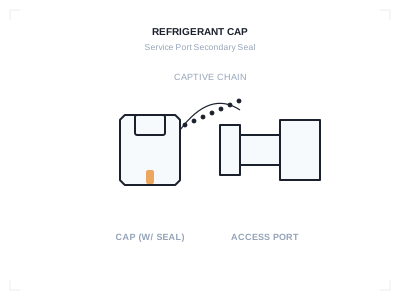
Threaded caps that seal refrigerant access ports between service intervals — secondary seal for safety and refrigerant retention.
Learn more →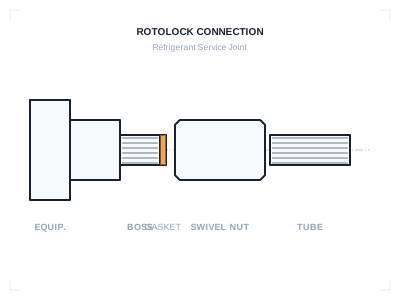
HVACR fitting type using a flange-and-bolt connection between compressor valve bodies and refrigerant piping.
Learn more →
Flare-style fitting for HVACR and gas service — the pipe end is mechanically flared to a 45° cone that seals against the…
Learn more →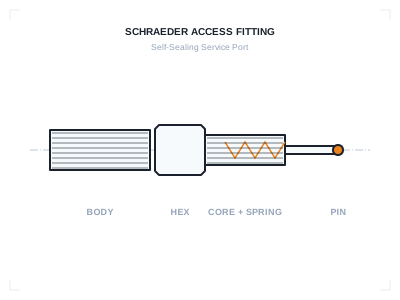
Refrigerant access port with a depressible core valve — same mechanism as a tire valve, used for gauge connection and charging.
Learn more →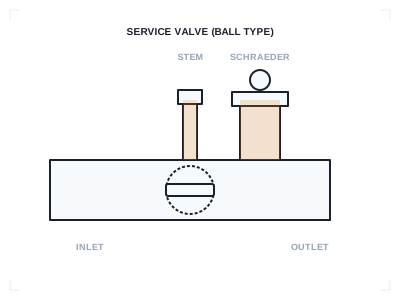
Refrigerant-rated ball valve installed in HVACR service ports — provides isolation, charging access, and pressure measurement capability.
Learn more →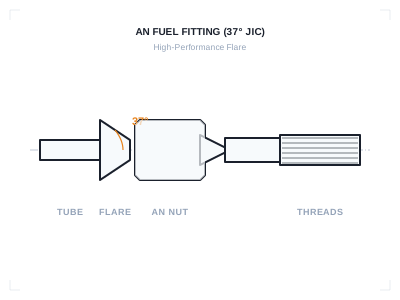
Aerospace-derived 37° flare fitting standard used in high-performance automotive fuel, oil, and brake systems — JIC equivalent.
Learn more →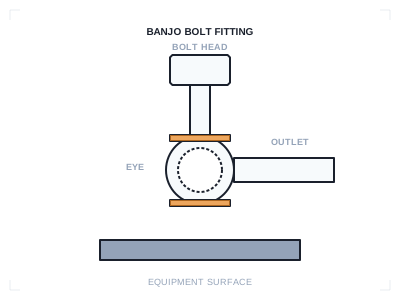
Hollow bolt and cylindrical fitting that mounts a fluid line to a flat surface — used in automotive brake, fuel, and turbocharger…
Learn more →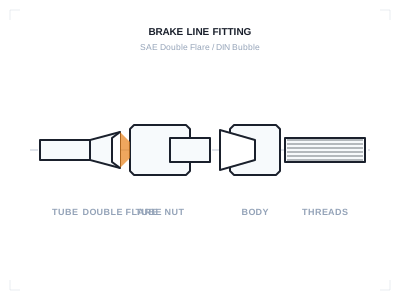
Specialized flare fittings for automotive brake lines — DIN bubble flare for European cars, SAE double flare for North American.
Learn more →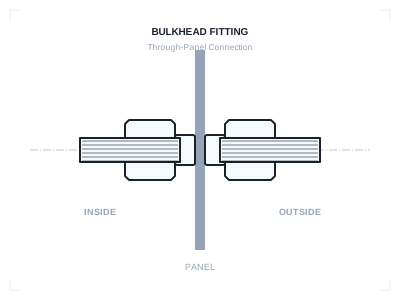
Through-panel fitting that allows a fluid line to pass through a firewall or bulkhead with a permanent, sealed transition.
Learn more →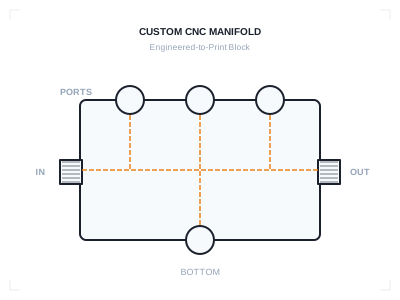
Engineered-to-print brass manifold block with multiple internal passages and connection ports — produced from CAD drawings.
Learn more →
Brass housing that holds an engine coolant temperature sensor in the engine block coolant passage — typically with M12×1.5 threads.
Learn more →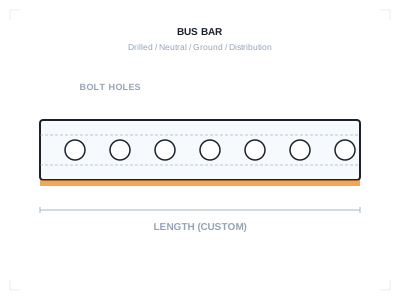
Solid copper or brass bar that distributes electrical current within panels — drilled for cable lugs at specific connection points.
Learn more →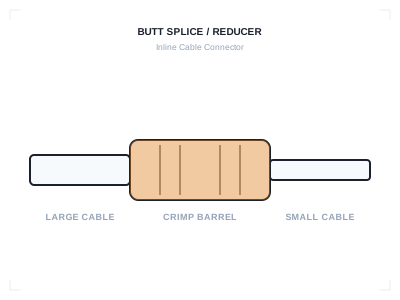
Crimp-on connector that joins two cable ends in line — butt splices for equal-size cables, reducers for size transitions.
Learn more →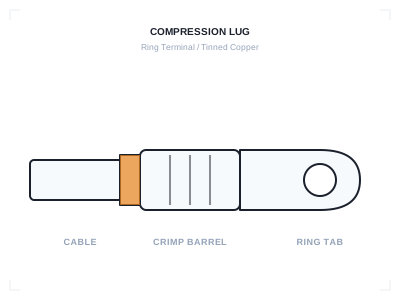
Tinned copper or brass terminal that crimps onto stranded electrical conductor — provides a bolted or screwed connection point.
Learn more →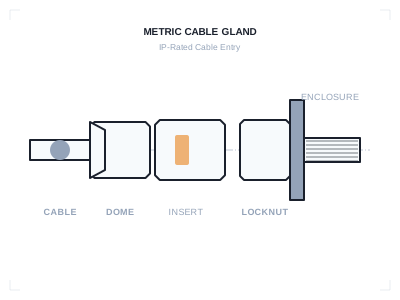
Brass cable gland with metric thread sizes that anchors and seals electrical cable entries to enclosures — IP-rated for outdoor and harsh…
Learn more →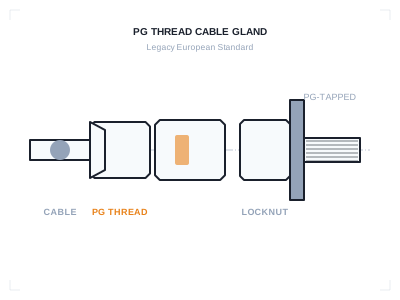
Cable gland using the older PG (Panzer-Gewinde) thread standard — still common in European industrial equipment and retrofit work.
Learn more →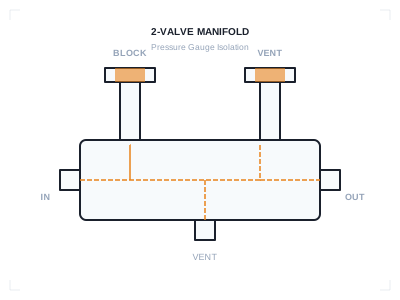
Integrated instrument manifold with two valves — typically used for pressure gauge isolation with vent/drain capability.
Learn more →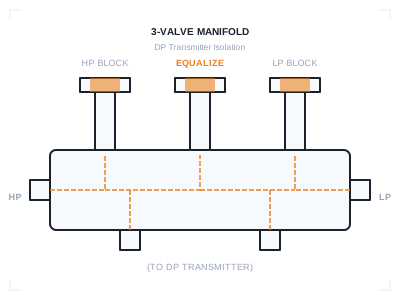
Differential pressure transmitter manifold with two block valves and one equalizing valve for safe transmitter isolation.
Learn more →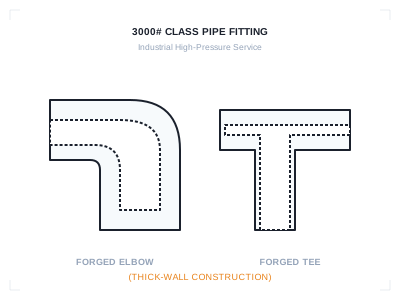
High-pressure forged brass pipe fitting rated to 3000# class per ASME B16.11 — for industrial and oilfield service.
Learn more →
Integrated isolation valve with built-in bleed port — provides single-point isolation and venting for instrument or sampling connections.
Learn more →
Threaded brass fittings for joining two pipe ends in a straight run — couplings for permanent joints, unions for disconnectable service.
Learn more →
Threaded brass fitting that changes pipe direction by 90° or 45° — available in forged or cast styles for water, gas, and…
Learn more →
Short threaded brass connectors that bridge between fittings or transition between thread types (NPT to BSP, male to female, etc.).
Learn more →
Three-way threaded brass fitting that creates a branch off a main pipe run — available in equal-size and reducing configurations.
Learn more →
Engineered-to-print brass manifold block with multiple internal passages and connection ports — produced from CAD drawings.
Learn more →
Pressure-rated threaded brass fitting made by hot-forging rather than casting — higher strength, finer grain structure, better for industrial service.
Learn more →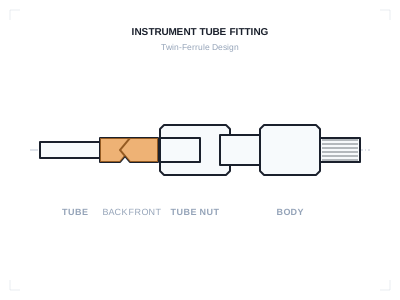
Two-ferrule compression-style tube fitting for instrument and small-bore process tubing — Swagelok-compatible.
Learn more →
Direction-change and branching fittings for small-bore process tubing — uses twin-ferrule sealing at each tube connection.
Learn more →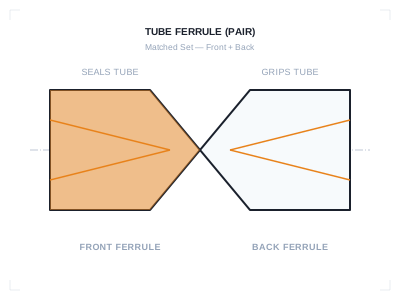
The matched-pair components inside a twin-ferrule tube fitting — front ferrule seals against the tube, back ferrule provides mechanical grip.
Learn more →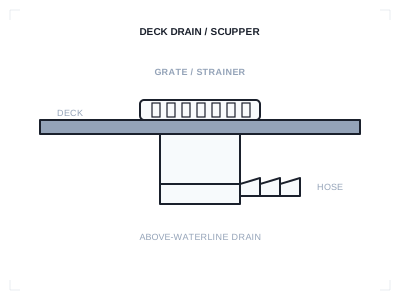
Above-waterline drain fitting that allows water to flow off deck areas and out through the hull — for cockpit, anchor locker, and…
Learn more →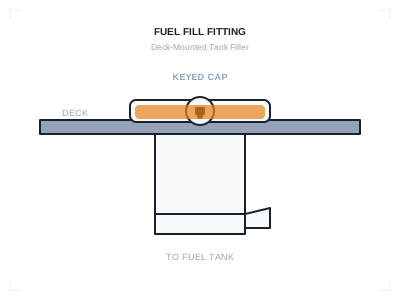
Deck-mounted fitting that allows fuel hose nozzle insertion for filling vessel fuel tanks — keyed or non-keyed designs.
Learn more →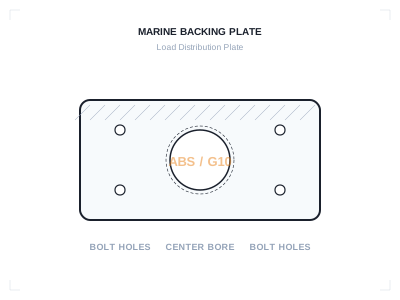
Engineered plastic or fiberglass plate that distributes through-hull installation load across the hull material — prevents stress concentration.
Learn more →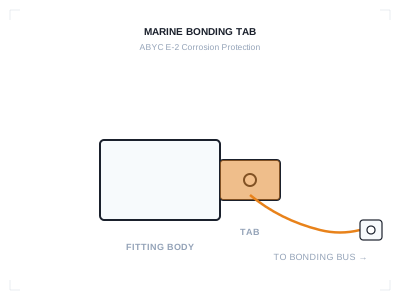
Small metal tab on a through-hull or sea cock that connects the underwater fitting to the vessel's bonding system for corrosion control.
Learn more →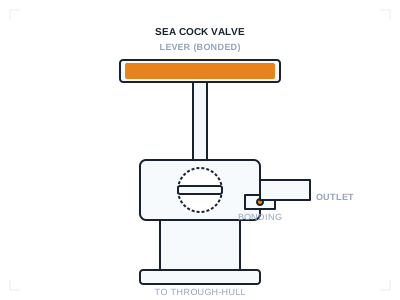
Quarter-turn ball valve installed at a below-waterline through-hull — provides positive shutoff for the seawater connection in case of hose failure.
Learn more →
Slotted or perforated cover that fits over a through-hull intake — keeps debris and marine life out of the seawater intake.
Learn more →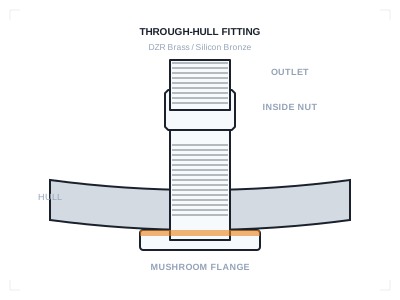
Watertight fitting that passes through a vessel hull below or above the waterline — DZR brass or silicon bronze for marine corrosion…
Learn more →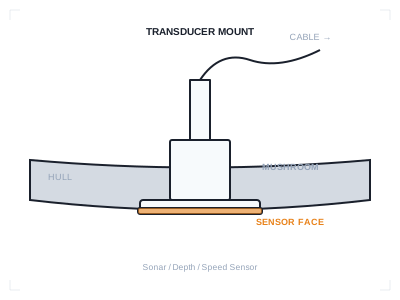
Specialized through-hull fitting for mounting sonar, depth, speed, and temperature transducers — flush or fared profile.
Learn more →We supply hundreds of brass fitting variants across all six product categories. Submit your specifications and our US-based B2B sales team will respond with availability and pricing.