
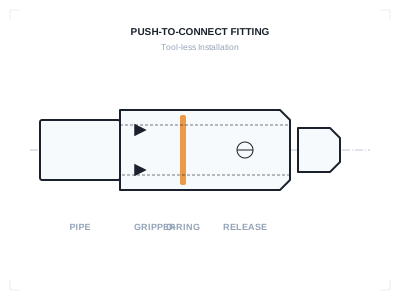
Push-to-connect fittings — also called push-fit or push-on fittings — are a modern alternative to soldered, threaded, and crimped plumbing connections. The fitting works without tools: the pipe is simply pushed into the fitting body, where internal stainless steel teeth grip the outside of the pipe and an O-ring seals against the pipe surface. To disconnect, a release ring is depressed around the pipe, freeing the teeth and allowing the pipe to be withdrawn intact.
The primary advantage of push-to-connect fittings is installation speed. Connections that would take several minutes with traditional methods can be made in seconds, with no flame, no flux, and no special tools. This makes them especially valuable for emergency repairs, tight-quarters work where soldering is difficult or unsafe, and situations where the installer needs to test, modify, and finalize a system as work progresses.
Push-to-connect fittings are compatible with multiple pipe materials. Most push fittings on the market today are rated for use with copper (Type L, M, and K), PEX-A, PEX-B, PEX-C, and CPVC, sometimes in the same fitting body — meaning a single fitting can transition between materials, which is useful in mixed-system retrofits.
Material construction is generally the same regardless of pipe type: lead-free brass body (NSF 61 / NSF 372 certified for potable water), stainless steel gripper teeth, and an EPDM or similar elastomer O-ring rated for both hot and cold water service. The body finish is typically natural brass for industrial work and chrome or nickel plate for retail-visible installations.
The complete push-fit family covers the same geometry range as other plumbing fitting systems: elbows, tees, couplings, reducing fittings, male and female adapters, isolation valves, and fixture stops.