
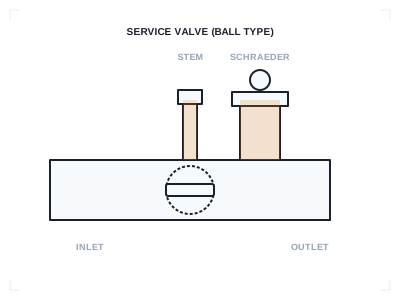
Service valves are the access and isolation points built into HVACR systems for use during charging, evacuation, leak testing, and routine maintenance. The ball-type service valve combines a quarter-turn ball valve mechanism with one or more side ports for service connection — typically a Schraeder access port for gauge connection, and sometimes additional ports for pressure switches, sight glasses, or other system accessories.
When the ball valve is in the back-seated position (fully open), refrigerant flows freely through the main line and the side ports are isolated from the line by the valve stem itself. When the valve is moved to the mid-position, both the main line and the side ports are connected — this is the configuration used during service work, when refrigerant must be sampled or charged through the service ports. When the valve is in the front-seated (fully closed) position, the main line is isolated and only the service ports are accessible — used to remove a component from the system without losing the refrigerant charge in the rest of the loop.
Most ball service valves use a manual stem that is rotated with a square-drive service tool — typically a 1/4" or 5/16" square wrench. The stem position is held by a back-seating O-ring that prevents leakage past the stem during normal operation. Some valves include a cap over the stem to provide a secondary seal and prevent accidental rotation.
Material construction follows standard HVACR practice: C36000 brass body, chrome-plated brass ball, PTFE or PEEK seats rated for the refrigerant temperature range, and EPDM or HNBR O-rings selected for refrigerant compatibility. The full assembly is typically rated for the same maximum working pressure as the rest of the refrigerant circuit.
Service valves are found at compressor suction and discharge points, condenser inlets and outlets, evaporator inlets, and any other point in the refrigerant loop where service access is required.