
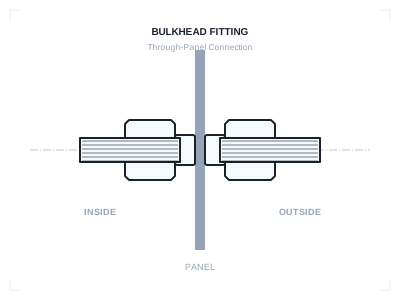
Bulkhead fittings are designed for installations where a fluid line must pass through a panel, firewall, or vessel wall with a clean, sealed transition. The fitting has a threaded shaft with two nuts and washers — one on each side of the panel — that clamp the fitting in place when tightened, creating a watertight or fluid-tight seal at the panel penetration. The two ends of the fitting then provide separate connection points for the fluid lines on either side of the panel.
In automotive applications, bulkhead fittings are most commonly found at firewall penetrations between the engine compartment and the passenger compartment — for AC refrigerant lines, heater hoses, oil cooler lines, fuel lines, and various sensor or pressure lines. The bulkhead fitting provides a clean, finished appearance at the firewall and prevents the line from chafing against the bare hole in the sheet metal.
The two ends of a bulkhead fitting can be configured in any combination of connection types — AN flare on both ends, AN on one side and NPT on the other, NPT on both ends, or specialty configurations like AN-to-quick-disconnect for fittings that need to be disconnected during service. The body design also varies: straight-through bulkheads are the most common, but right-angle (elbow) bulkheads are available for installations where the line must change direction immediately on either side of the panel.
Specialized variants include grommeted bulkheads, where the fitting incorporates an integrated rubber grommet to seal against an irregular or oversized panel hole; and washer-sealed bulkheads, where standard sealing washers compress between the nuts and the panel surfaces.
Material construction varies by application. Aluminum bulkheads are common in performance automotive work because of their light weight and ease of machining. C36000 brass is used where corrosion resistance or higher strength is needed. Stainless steel bulkheads are specified for harsh environments such as marine or industrial chemical applications.