
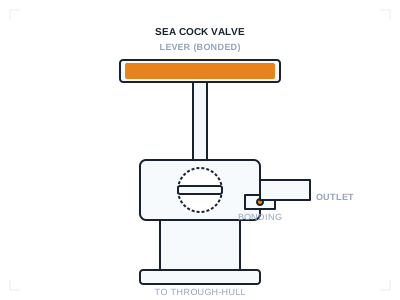
Sea cock valves are the manual isolation valves installed immediately inboard of below-waterline through-hull fittings on cruising and offshore vessels. The valve provides a positive, immediate shutoff capability for any below-waterline penetration — critical safety equipment in case of a hose failure, equipment leak, or other situation where seawater begins flooding the boat through the through-hull connection.
Design requirements for sea cocks are substantially more demanding than for typical industrial ball valves. The valve must operate reliably after long periods of disuse (boats may sit at the dock for months between active service), it must resist the marine corrosion environment (seawater plus dissimilar-metal contact plus stagnant low-oxygen conditions inside the hull), and it must provide unambiguous open or closed indication that any crew member can verify visually in an emergency. ABYC Standard H-27 specifies the design and installation requirements for sea cock valves in below-waterline service.
Materials match the through-hull fittings they connect to — DZR brass (CW602N) or silicon bronze (C65500). Standard brass and standard bronze are not acceptable for sea cock service because of dezincification and corrosion concerns. Some sea cocks are also produced in 316 stainless steel for vessels where additional corrosion resistance is required, though stainless steel valves are typically more expensive and are less common in pleasure-craft applications.
The ball valve itself uses a chrome-plated brass or stainless steel ball with PTFE seats — the standard combination for marine service that balances corrosion resistance, low operating torque, and durability against the abrasive sediment and biological matter that gets drawn into seawater intakes. The handle is typically a 316 stainless steel lever with a positive open/closed indicator stop. Bonding tabs allow the valve to be electrically connected to the vessel's negative bus per ABYC E-2 corrosion-protection requirements.
Flanged sea cocks include an integrated mounting flange for direct bolting to the through-hull's inboard flange — a more robust attachment than the threaded connection used for less-demanding applications.