
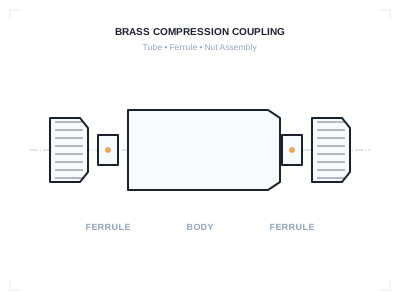
Brass compression couplings are one of the most widely used plumbing fittings in North American residential and light commercial water supply systems. The fitting works by drawing a brass ferrule (a tapered ring) tightly against the outside of the pipe as a threaded compression nut is tightened — forming a watertight seal without the need for soldering, threading, or specialized tools. This makes compression couplings especially valuable in retrofit and repair work where access is limited and the installer needs a fast, reliable joint.
The complete compression coupling assembly includes three matched components: the coupling body (which contains the female sealing surface), the compression nut (which provides the clamping force), and the brass ferrule (which deforms slightly to create the seal). Supplying these as a matched set eliminates the most common installation error — mixing ferrules and nuts from different manufacturers, which can cause the seal to fail under pressure.
Materials for compression couplings depend on the application. For general industrial water and gas service, free-machining brass alloys are typical. For potable water service across the United States, lead-free brass alloys complying with NSF 61 and NSF 372 are required by federal law — the same standards apply for any fitting that contacts drinking water. The choice between standard and lead-free brass is determined by the end use, not by the fitting style itself.
Finish options include natural brass (the default for industrial use), chrome plate (preferred for visible installations and retail display), nickel (for added chemical resistance), and tin (for food-grade applications). All finishes are applied over the same base brass, so the structural integrity of the fitting is unaffected by finish choice.