
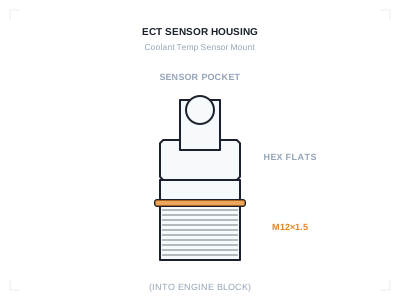
Engine Coolant Temperature (ECT) sensor housings are the precision brass components that mount engine coolant temperature sensors into the coolant passages of internal combustion engines. The housing serves multiple functions: it provides the threaded interface that seals the sensor against the engine block, it positions the temperature-sensing tip at the correct depth in the coolant stream, and it provides the electrical reference point that grounds the sensor body to the engine ground.
In modern OEM and Tier 1 automotive production, ECT sensor housings are precision-machined components with tight tolerances on the sealing surfaces, the sensor pocket, and the wrench flats. The most common thread sizes are M12×1.5 (the dominant European and Japanese standard), M10×1.5 (used on some smaller engines and on some Korean-built vehicles), and M14×1.5 (used on some heavy-duty diesel and commercial vehicle applications). Custom threads are also produced for specific OEM specifications.
The sealing geometry is typically a tapered seal (compressing a copper or aluminum crush washer between the housing flange and the engine block) or an O-ring seal (using an elastomer ring in a precision-machined groove). Tapered seals are simpler and more tolerant of moderate damage to the sealing surface; O-ring seals provide more consistent torque-vs-leak behavior and are preferred for serviceable parts where the housing is removed and reinstalled multiple times during the vehicle's service life.
The sensor pocket — the internal cavity that receives the actual temperature sensor — is machined to match the sensor manufacturer's specifications. This includes the bore diameter, the depth, the entry chamfer, and any internal stop features. Even small variations in pocket geometry can affect the temperature reading by changing the thermal contact between the coolant and the sensor tip.
Materials are typically C36000 free-machining brass for fast volume production, or C37700 forging brass when the housing geometry includes features that benefit from a forged-then-machined manufacturing route. PPAP documentation is standard for OEM supply.