
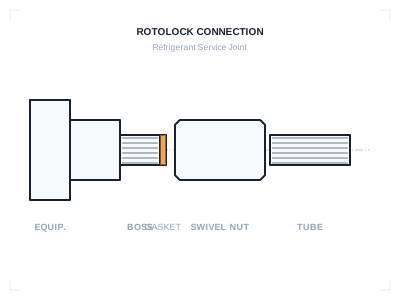
The Rotolock connection is a specialized refrigerant fitting style developed for connecting compressor service valves, suction line shut-off valves, and similar HVACR equipment components to the system's refrigerant piping. The connection consists of a male-threaded boss on the equipment side and a swivel-nut fitting on the piping side, with an O-ring or copper gasket providing the seal between them. Tightening the swivel nut compresses the gasket and creates a leak-tight seal capable of holding refrigerant at the high pressures encountered in modern HVACR systems.
Unlike standard SAE flare connections, Rotolock fittings do not require the tubing end to be flared — the tubing is typically soldered or brazed to the swivel-nut fitting body, then the assembly is bolted or threaded onto the equipment side. This makes Rotolock connections particularly suited to factory-built equipment where the connection geometry is set during manufacturing rather than during field installation. It also allows the connection to be broken cleanly for service work without affecting the tubing run.
The Rotolock family includes adapters that transition between Rotolock and other connection types — Rotolock-to-flare adapters allow service technicians to connect standard flare-equipped gauges or charging hoses to Rotolock-equipped equipment, and Rotolock-to-NPT adapters provide threaded connection points for pressure switches, sight glasses, or other accessories.
Materials are typically C36000 brass for the fitting bodies and copper for the gaskets, with nickel-plated brass or stainless steel for the threaded nuts in high-corrosion environments. The internal Schraeder valve found in some Rotolock service valves uses an EPDM or similar refrigerant-compatible seal material.
Rotolock connections are most commonly found on commercial and industrial refrigeration compressors, walk-in cooler condensing units, packaged HVAC systems, and OEM-built refrigeration equipment.