
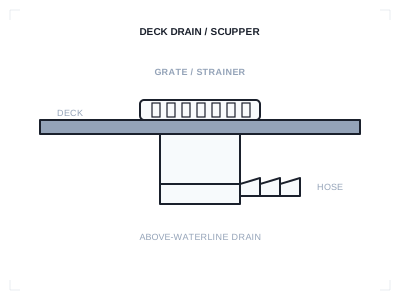
Deck drains and scuppers are the above-waterline drainage fittings that allow water to flow off horizontal deck areas — cockpit floors, anchor lockers, side decks, and other surfaces where rainwater, spray, or wash-down water accumulates — and out through the hull side or transom to escape the boat. Although above the waterline, these fittings are still exposed to seawater spray, sun, and the marine environment, so they are typically manufactured from marine-grade materials similar to those used in below-waterline through-hull applications.
Deck drains typically have a flush or low-profile flange on the deck side, with a hose barb or threaded outlet on the inboard side that connects to a drainage hose running to a hull-side scupper or transom discharge. Some deck drains include an integrated strainer cover to prevent debris from entering and clogging the drainage line. The drain body may be threaded into a backing plate for serviceable installation, or bonded permanently with a sealant for low-maintenance installation.
Scuppers are the matching hull-side discharge fittings — typically a slightly larger flanged opening on the hull exterior with a one-way flap or simple open passage on the inside, allowing water to exit but minimizing seawater backflow when the boat is heeling or operating in rough conditions. Some scupper designs include a hinged flap or rubber flap that opens with outward flow and closes against incoming water.
Material standards depend on the location. Cockpit drains and scuppers that may experience occasional immersion (when the boat is heeling significantly) are typically DZR brass or silicon bronze, the same materials used for below-waterline fittings. Side-deck drains and anchor-locker drains that are well above any expected waterline can be standard marine-grade brass or even chrome-plated brass for cosmetic appeal in visible installations. 316 stainless steel deck hardware is also widely used.
Finish options include natural brass or bronze, chrome plate (most common for visible deck hardware on production boats), and nickel for added corrosion resistance in salt-spray environments.