
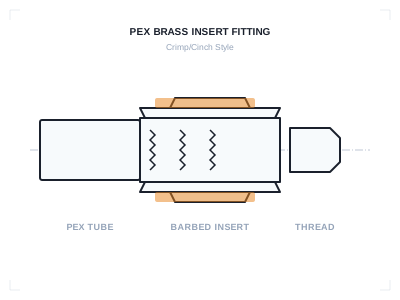
PEX (cross-linked polyethylene) tubing has largely replaced copper for new residential plumbing installations across North America, and lead-free brass insert fittings are the critical interface between PEX runs and the threaded connections at fixtures, manifolds, water heaters, and appliances. The fitting is designed to be inserted into the end of the PEX tube, where a crimp ring or stainless steel cinch clamp compresses the tubing against the fitting's serrated barb to form a permanent, leak-free joint.
Two installation methods are common: crimp-ring style, which uses copper crimp rings and a calibrated crimp tool, and clamp/cinch style, which uses 304 stainless steel ear clamps and a one-handed cinch tool. Both styles work with PEX-A, PEX-B, and PEX-C tubing from major manufacturers including Uponor, Viega, Rehau, Apollo, SharkBite, and Watts. The choice between crimp and clamp typically comes down to installer preference and code requirements in the specific jurisdiction.
Because PEX insert fittings carry potable water in essentially every residential application, lead-free brass is the standard. Alloys compliant with NSF 61 (health effects of materials in contact with drinking water) and NSF 372 (lead content limits) are required nationwide under the Reduction of Lead in Drinking Water Act, and many states have additional certification requirements such as California AB 1953.
The complete PEX insert fitting family includes elbows for direction changes, tees for branch lines, couplings for splicing runs, reducing fittings for transitions between sizes, male and female threaded adapters for connecting to fixtures and appliances, plug ends for capping unused stubs, and drop-ear elbows or stub-out ells for rough-in at faucet and toilet supply locations.