
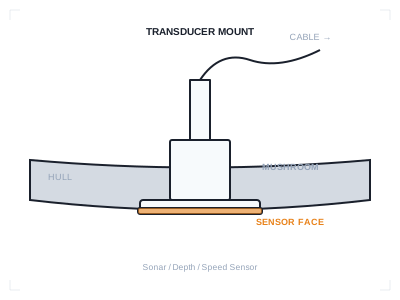
Transducer mounts are specialized through-hull fittings designed to hold sonar, depth, speed, water-temperature, and similar electronic transducers in the hull at the correct orientation for accurate readings. The fitting must satisfy three distinct requirements: it must be watertight (since the transducer's body penetrates the hull), it must hold the transducer at a precise angle to the water flow (since incorrect tilt angle distorts sonar and speed readings), and it must minimize hull drag at cruising speeds (since the transducer is exposed to the water flow under the boat).
The most common transducer mount style is the through-hull mount with a stepped bore that receives a specific transducer body diameter. The transducer is inserted from outside, secured by a back nut and washer on the inside, and sealed with a marine-grade sealant. A faring block (typically a small molded piece of plastic or rubber) is often used between the transducer face and the hull to compensate for the hull's deadrise angle, ensuring the transducer face is parallel to the water flow direction.
Mushroom-head transducer mounts are a low-profile alternative for installations where minimum drag matters and where the transducer doesn't need to extend significantly below the hull. The mushroom-head profile sits nearly flush with the hull surface, with only the transducer face protruding into the water flow. This is the typical mount style for depth-finder transducers on production sport-fishing boats and cruising sailboats.
Different transducer brands and models use different mount dimensions, and the mount must be matched to the specific transducer being installed. Common transducer body diameters include 1" (for small recreational depth finders), 1-1/2" (for typical fish-finder transducers), 2" (for higher-output sonar units), and larger sizes for chirp transducers and side-imaging units used on larger boats and commercial vessels.
Materials are the same as other below-waterline through-hulls: DZR brass or silicon bronze. ABYC P-1 compliance is required for any through-hull below the waterline. Backing plate use is recommended for all transducer installations to distribute load and prevent hull stress concentration.